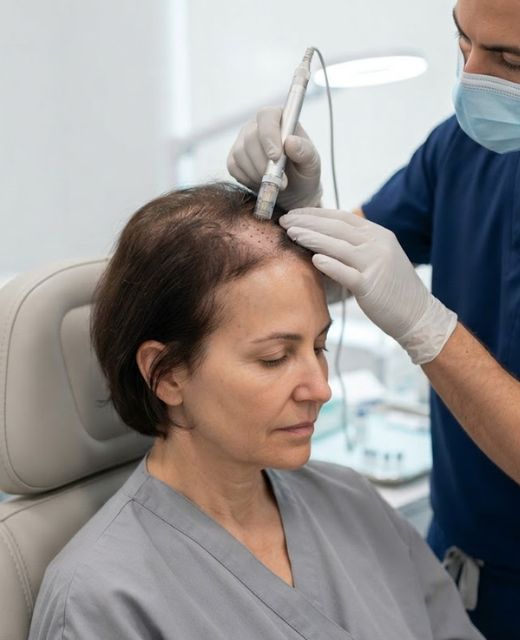
A quick look at what to expect — from procedure time to visible results.
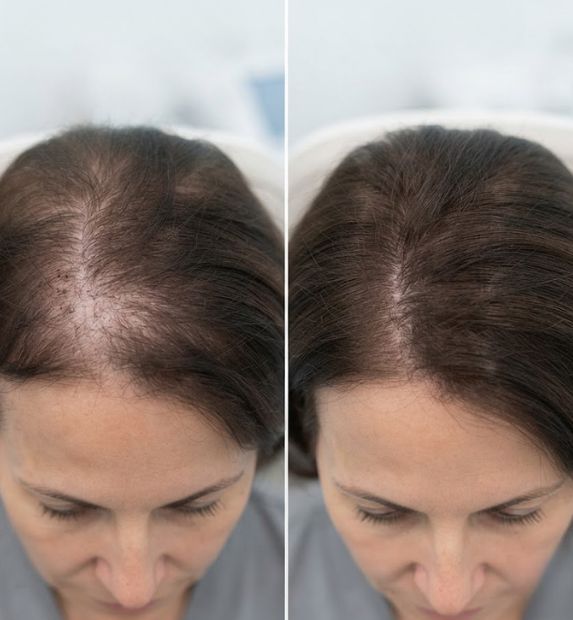
Stem cells are specialized cells that have the ability to develop into certain types of cells and participate in biological processes involved in tissue maintenance and repair.
Stem Cell Hair Therapy refers broadly to approaches that investigate or use stem-cell-related biological mechanisms for hair and scalp applications. The field forms part of the broader area of regenerative medicine, which explores ways of supporting tissue function through cellular and molecular processes.
In hair restoration, researchers are studying whether stem-cell-based approaches may influence signaling between cells and the environment surrounding hair follicles. The aim is potentially to support follicular activity rather than simply treating the visible appearance of hair loss.
However, not all stem-cell-based treatments are the same. The source of cells, preparation methods, delivery approach, product characteristics, and clinical evidence can differ substantially.
It is important to distinguish between the concept of regenerative medicine and treatments that have been conclusively established for hair loss.
Stem-cell-related hair therapies remain an evolving area of research. Some scientific findings are promising, but this does not mean that every stem-cell treatment has been proven to produce consistent hair regrowth in humans.
Stem cells should not be described as capable of regenerating every damaged or inactive hair follicle.
Conventional hair-loss management can include medications, PRP, nutritional correction, scalp treatment, light-based therapy, and hair transplantation, depending on the diagnosis.
Stem-cell-based approaches focus on cellular and regenerative mechanisms and may therefore be considered differently from treatments that directly replace lost hair follicles.
The appropriate option depends on the patient's condition rather than the name of the treatment alone.
The proposed mechanism of Stem Cell Therapy for Hair involves biological signaling between cells and the surrounding tissue environment.
Depending on the specific treatment protocol, cellular or regenerative material may be prepared and applied to selected scalp areas. The exact source, preparation process, laboratory procedure, and delivery method vary between different approaches and should not be assumed without confirmation from the treating clinic.
Researchers are investigating whether stem-cell-related signaling could influence processes associated with tissue support and the environment surrounding hair follicles.
The potential objective is to create a more supportive environment for existing follicles. However, this does not mean that the treatment can regenerate every inactive follicle or reverse every type of hair loss.
Potential biological effects and actual clinical outcomes are also different concepts. Research may suggest a possible mechanism without proving that every patient will experience meaningful hair growth.
For this reason, terms such as may, potentially, and research suggests are more appropriate than guaranteed claims.
The potential benefits of Stem Cell Hair Therapy should be considered in the context of developing clinical evidence.
May Support the Hair Follicle Environment
Stem-cell-related biological signaling is being studied for its potential role in the environment surrounding hair follicles.
May Support Scalp Health
Depending on the treatment approach, regenerative therapy may be considered as part of a broader strategy for supporting scalp and hair health.
May Help the Appearance of Thinning Hair
Selected patients may consider regenerative approaches when they are concerned about the appearance of thinning hair. The extent of any improvement varies.
May Support Hair Density
Researchers are investigating whether regenerative mechanisms can support follicular activity and hair density in selected circumstances.
Regenerative-Medicine-Based Approach
Stem-cell-based hair treatments are connected to the broader field of regenerative medicine, which explores cellular and tissue-support mechanisms.
Potentially Minimally Invasive
Whether a treatment is minimally invasive or non-surgical depends on the actual clinical protocol and method of application. The specific approach should be explained before treatment.
Personalized Treatment Planning
A personalized plan takes into account the cause and pattern of hair loss, scalp condition, existing follicles, medical history, and treatment objectives.
These potential benefits should not be interpreted as guaranteed outcomes.
Stem Cell Therapy for Hair Loss is an emerging area of interest for patients experiencing reduced hair density and selected forms of hair thinning.
Depending on the diagnosis, a stem-cell-based approach may be discussed for:
Hair thinning
Reduced hair density
Early-stage hair loss
Selected forms of pattern hair loss
Hair follicle support
Hair loss has many possible causes. Genetic pattern hair loss, hormonal changes, nutritional deficiencies, scalp disorders, stress-related shedding, medications, and systemic conditions may require different approaches.
A patient with sudden or unexplained hair loss should undergo appropriate medical assessment before choosing a regenerative treatment.
Stem Cell Hair Therapy cannot be assumed to work for every type of hair loss. Existing follicle condition, the stage of hair loss, scalp health, and the underlying cause all matter.
Healthy scalp conditions can provide an important environment for existing hair follicles.
Stem-cell-related approaches are being investigated for their potential role in supporting cellular communication and tissue processes within the scalp. Depending on the individual situation, treatment may be considered with the aim of supporting:
Scalp health
The hair follicle environment
Hair thickness
Hair density
The overall appearance of thinning hair
However, regenerative hair treatments remain an evolving field. Outcomes may vary substantially between patients, and existing follicle condition can influence the potential response.
Patients should therefore have realistic expectations and understand that Stem Cell Hair Therapy is not a guaranteed method of hair regeneration.
| Country | Approximate Cost Range |
|---|---|
| India | ₹30,000 – ₹1,00,000 |
| USA | $3,000 – $10,000 |
| Australia | AUD 4,000 – AUD 12,000 |
| UAE | AED 10,000 – AED 25,000 |
| Thailand | THB 80,000 – THB 200,000 |
| City | Approximate Cost Range |
|---|---|
| Hyderabad | ₹30,000 – ₹1,00,000 |
| Mumbai | ₹40,000 – ₹1,20,000 |
| Delhi | ₹35,000 – ₹1,10,000 |
| Bangalore | ₹35,000 – ₹1,10,000 |
| Chennai | ₹30,000 – ₹1,00,000 |
These are approximate cost ranges for general information only. Actual treatment costs may vary depending on the complexity of surgery, treatment areas, surgical technique, anesthesia, facility charges, surgeon's assessment and post-operative care. Revision and combined procedures may have different costs.
Stem Cell Hair Therapy works best for the right patient profile. Here's how to know if it's right for you.
Selected types of hair thinning
Reduced hair density
Early-stage hair-loss concerns
Certain pattern hair-loss presentations
Suitable scalp and follicle conditions based on professional assessment
Unexplained or sudden hair loss
Active scalp infection or significant inflammation
Certain medical conditions affecting healing or treatment safety
Known allergies or sensitivities relevant to the proposed treatment
Conditions or medications that may affect treatment safety
Stem Cell Hair Therapy can address different concerns related to the treatment area, depending on your individual anatomy, condition, and treatment goals.
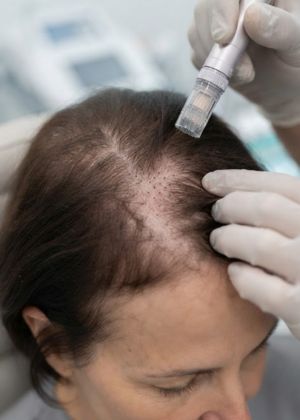
Modern techniques chosen based on your body profile, goals, and surgeon's assessment.
A stem-cell-based approach may be considered for selected patients experiencing hair thinning. The objective is potentially to support the local follicular environment rather than guarantee new hair growth.
Learn moreSelected patients with pattern hair loss may discuss regenerative treatment as part of a broader hair-management plan. Diagnosis and assessment are important before choosing this approach.
Where reduced hair density is associated with thinning follicles, regenerative treatment may be considered as a supportive option. Individual responses can vary.
Learn moreThis approach focuses on the potential role of cellular signaling and tissue-support mechanisms around the scalp and hair follicles. It should not be interpreted as proof that inactive follicles can always be regenerated.
A personalized approach considers the patient's hair-loss pattern, scalp condition, follicle status, medical history, and treatment goals. Depending on the assessment, another treatment may be more appropriate.
Learn moreA clear, step-by-step overview of what happens from consultation to recovery.
Trusted by patients across Hyderabad and Visakhapatnam for over three decades.
Genuine feedback from our patients across Hyderabad.
Walk in or book an appointment at either of our centres.
We serve patients across Hyderabad and Visakhapatnam with the same standard of excellence, advanced equipment, and dedicated surgical teams.
Schedule a personalised consultation with Dr. YV Rao's expert team — and take the first step towards a more sculpted, confident you.