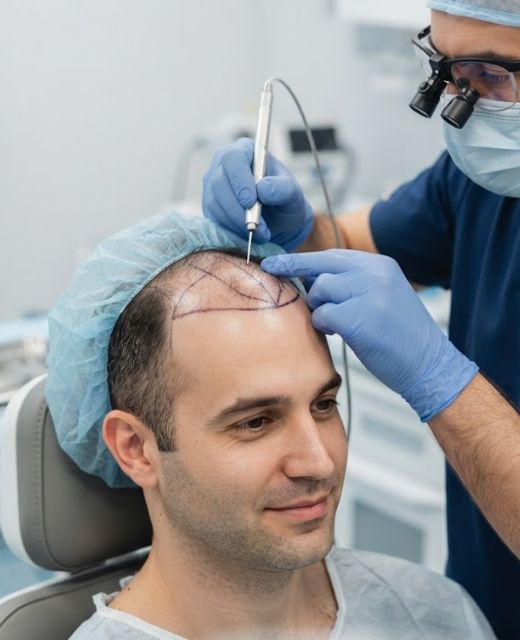
A quick look at what to expect — from procedure time to visible results.
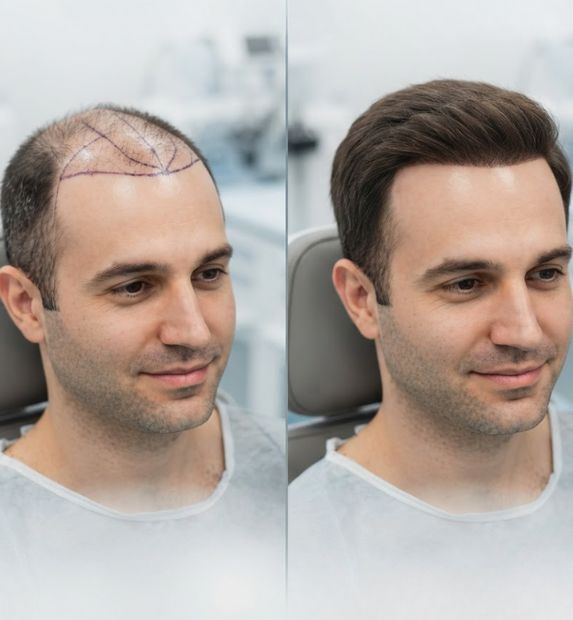
DHI, or Direct Hair Implantation, is a hair-transplant technique in which individual follicular units are extracted and then implanted into areas affected by hair loss.
The basic principle is straightforward: healthy hair follicles are selected from a suitable donor area and transplanted into areas where additional hair coverage is needed.
One characteristic of the DHI approach is the use of an implantation pen or implanter device to place individual grafts into the recipient area. The surgeon can control the placement and direction of grafts according to the treatment plan.
DHI is different from some other hair-transplant approaches in the way grafts are handled and implanted. However, the choice of technique should be based on the patient's individual condition rather than assuming that DHI is universally superior to every other method.
A DHI hair transplant treatment involves several carefully planned stages.
Donor and Recipient Assessment
The donor area is assessed to determine whether enough suitable follicles are available. The recipient areas are also evaluated to understand the pattern and extent of hair loss.
Hairline and Treatment Planning
The hairline and areas requiring restoration are planned according to the patient's facial proportions, existing hair, donor availability, and long-term hair-loss pattern.
Individual Graft Extraction
Individual follicular grafts are extracted from the donor area using an appropriate extraction technique. The grafts must be handled carefully to maintain their condition before implantation.
Graft Preparation and Handling
The extracted follicles are examined and prepared for implantation. Appropriate handling is important because transplanted follicles need to remain viable during the procedure.
Graft Implantation
The prepared grafts are implanted into the selected recipient areas using the DHI technique. The surgeon determines the position and direction of each graft according to the treatment plan.
Hair Direction and Angle
Hair direction and angle are particularly important when creating a natural-looking result. The placement needs to complement the patient's existing hair and planned hairline.
The final result cannot be guaranteed because outcomes depend on donor characteristics, scalp condition, graft quality, surgical technique, healing, and individual biological factors.
Potential benefits of DHI Hair Transplant may include:
Natural-looking hairline planning: DHI allows individual grafts to be positioned according to a planned hairline and the patient's existing hair pattern. Careful planning is important for achieving an appropriate appearance.
Precise placement of individual grafts: Individual follicular grafts can be placed in selected recipient areas. This allows the treatment to be tailored to areas where additional coverage is needed.
Control over hair direction and angle: The direction and angle of transplanted follicles can be planned to complement surrounding hair. This is particularly important around the frontal hairline.
Treatment of selected areas of hair thinning: DHI may be considered for localized concerns such as frontal thinning, a receding hairline, or selected areas of reduced density.
Uses the patient's own hair follicles: Hair transplantation uses follicles from the patient's own donor area. The availability and quality of suitable donor hair are important factors in determining candidacy.
Minimally invasive approach: DHI involves individual follicular extraction and implantation rather than a strip of scalp being surgically removed.
Potentially efficient recovery: Recovery varies between patients and depends on the extent of the procedure and individual healing. DHI may involve a different recovery experience from some traditional surgical approaches, but it should not be described as completely scarless or without recovery.
These are potential advantages rather than guaranteed results. Response to treatment varies between patients.
DHI Hair Transplant for hair loss may be considered when permanent hair loss has created areas where additional follicular coverage is desired.
Potential concerns include:
Receding Hairline
A receding hairline can change the appearance of the forehead and facial proportions. DHI may be considered when suitable donor follicles are available for hairline restoration.
Frontal Hair Thinning
The frontal scalp may lose density gradually with pattern hair loss. Selected patients may benefit from transplantation to restore coverage.
Crown Thinning
The crown can be affected by progressive pattern hair loss. Treatment planning for this area requires consideration of donor supply and the expected progression of hair loss.
Reduced Hair Density
Some patients may have reduced density rather than complete baldness. The doctor must assess existing hair and determine whether transplantation is appropriate.
Pattern Hair Loss
DHI may be considered for selected patients with pattern hair loss when the donor area provides sufficient healthy follicles.
Specific Areas Requiring Restoration
Some patients may have localized areas of hair loss requiring targeted restoration. DHI allows individual grafts to be placed into selected areas.
DHI cannot restore hair in every case. Donor-hair availability, the underlying cause and stage of hair loss, scalp health, and overall treatment goals all influence suitability.
| Country | Approximate Cost Range |
|---|---|
| India | ₹70,000 – ₹2,00,000 INR |
| USA | $4,000 – $12,000 USD |
| Australia | AUD 7,000 – AUD 15,000 |
| UAE | AED 15,000 – AED 35,000 |
| Thailand | THB 100,000 – THB 250,000 |
| City | Approximate Cost Range |
|---|---|
| Hyderabad | ₹70,000 – ₹2,00,000 |
| Mumbai | ₹1,00,000 – ₹2,50,000 |
| Delhi | ₹90,000 – ₹2,25,000 |
| Bangalore | ₹90,000 – ₹2,25,000 |
| Chennai | ₹80,000 – ₹2,00,000 |
These are approximate cost ranges for general information only. Actual treatment costs may vary depending on the complexity of surgery, treatment areas, surgical technique, anesthesia, facility charges, surgeon's assessment and post-operative care. Revision and combined procedures may have different costs.
DHI Hair Transplant in works best for the right patient profile. Here's how to know if it's right for you.
Pattern hair loss
Receding hairline
Localized hair thinning
Adequate donor hair
Stable or appropriately assessed hair loss
Realistic expectations about the outcome
Unexplained or sudden hair loss
Active scalp infection or significant scalp inflammation
Insufficient donor hair
Certain medical conditions affecting surgery or healing
Conditions or medications that may affect bleeding or surgical safety
Other relevant medical concerns
DHI Hair Transplant in can address different concerns related to the treatment area, depending on your individual anatomy, condition, and treatment goals.
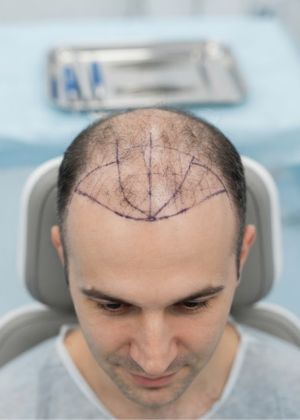
Modern techniques chosen based on your body profile, goals, and surgeon's assessment.
This approach focuses on restoring a receding or poorly defined hairline using individually transplanted follicles. Hairline design considers the patient's facial proportions and existing hair.
Learn moreFrontal restoration may be considered when thinning has affected the area behind the hairline. Individual graft placement can be planned to provide additional coverage while maintaining a natural transition.
Crown restoration focuses on selected areas of thinning around the vertex. The treatment plan must account for the amount of donor hair available and the possibility of future hair loss.
Learn morePatients with reduced density in selected areas may be assessed for additional follicular coverage. The doctor must consider existing hair and available donor follicles before recommending treatment.
A personalized DHI plan considers the patient's hair-loss pattern, donor supply, scalp condition, facial characteristics, and long-term goals. Another hair-transplant technique may be recommended if it is more appropriate for the individual case.
Learn moreA clear, step-by-step overview of what happens from consultation to recovery.
Trusted by patients across Hyderabad and Visakhapatnam for over three decades.
Genuine feedback from our patients across Hyderabad.
Walk in or book an appointment at either of our centres.
We serve patients across Hyderabad and Visakhapatnam with the same standard of excellence, advanced equipment, and dedicated surgical teams.
Answers to the questions our patients ask most before undergoing dhi hair transplant in.
Schedule a personalised consultation with Dr. YV Rao's expert team — and take the first step towards a more sculpted, confident you.